24

24

Hail Mary, full of grace

The greatest treasure of Santiago de Compostela Cathedral, the tomb of St James and his two disciples, lies in the crypt beneath the high altar. In addition, there are a number of other chapels in the choir, some of which are dedicated to the Virgin Mary. This is only natural, as she is not only the mother of Christ, but is also considered the intercessor of all believers and is particularly revered in Spain. Legend has it that without her encouragement, James might have given up in the face of his lack of success in evangelizing Spain.
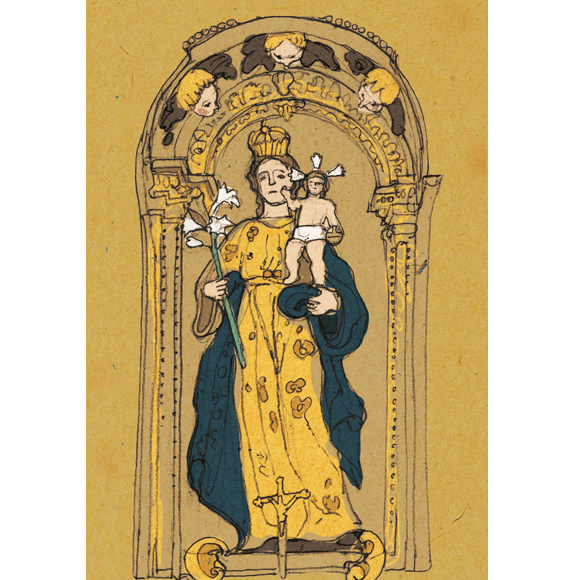
And so the Chapel of Santa Maria la Blanca was built close to the main altar, almost next to it the Chapel of Santa Fe with the statue of the ‘Mother of Good Counsel’ and the Chapel of the ‘Virgin of the Pillar’, which commemorates the moment when she appeared to the disheartened apostle in Zaragoza. The Chapel of Azucena, or Saint Peter’s Chapel,is also located in the choir. Its basic structure is still entirely Romanesque, it was remodeled in the 15th century and given a lavishly decorated altarpiece in the Baroque period, which shows the crowned figure of Mary from the last door of the calendar. On her left arm she carries the Christ Child, while her right hand displays a lily, the symbol of her purity. The crown, finally, signifies her title as Queen of Heaven and Earth.

With this image, I wish you all
a blessed Christmas.

23

23

The Gate of Glory

After weeks, probably months, on a seemingly endless journey, the medieval pilgrim finally arrives exhausted at his destination and stands before the cathedral. He is directed to the west portal; that is where he must enter. But before he even sets foot through the gate, he stops, completely overwhelmed, and looks up at the Pórtico de la Gloria, which depicts multi-figured scenes from the Bible and Christ as Redeemer and Judge of the World.
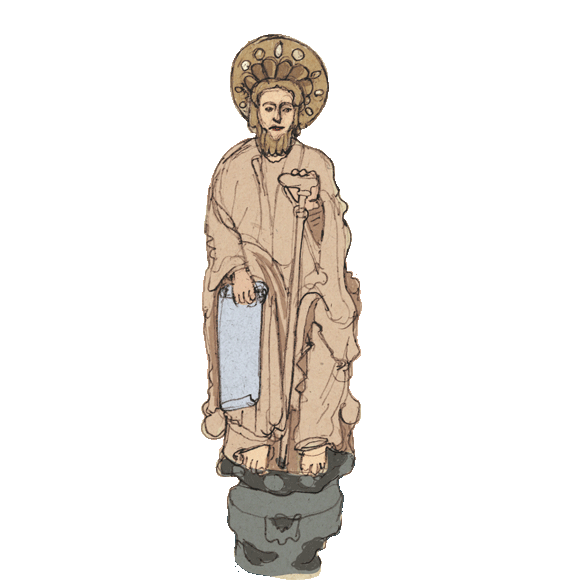
Like most people of his time, our pilgrim cannot read or write, but he is familiar with the biblical stories from the frescoes in his local church and the sermons of the parish priest. Amidst all the theological drama to the left and right and in the tympanum, he is greeted by the gentle gaze of St James, whose figure divides the entrance in two and whose tomb he is about to visit inside the cathedral.
Today, the portal is protected behind the Baroque façade, which was probably built to protect the polychrome figures from further fading and erosion. Virtually nothing is known about the master builder who created this marvel, apart from his name, Mateo. Together with his workshop, he crafted the portal on behalf of Fernando II of León and probably needed twenty years to carve the figures from stone with all the sophistication of High Gothic artistry; the work was completed around 1188. Whether he really gave his features to a figure on the inside of the Pórtico will never be known. However, anyone wishing to contemplate the promise of salvation in the Bible in a stunning panorama has come to the right place.

22

22

Under the Botafumeiro

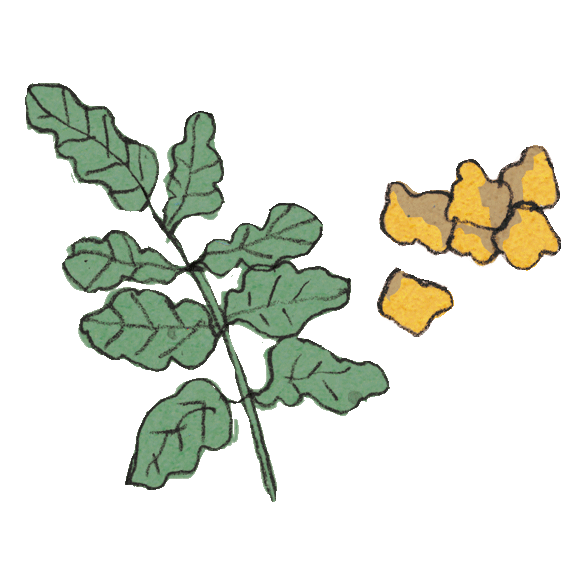
After Holy Communion, when in Santiago Cathedral Mass is drawing to a close, the moment every pilgrim has been waiting for arrives. Accompanied by the baroque organ’s sound, the Botafumeiro, the huge censer suspended from the ceiling, is filled with glowing coals and incense and hoisted into the air. Eight men, the Tiraboleiros, set it in motion with a system of ropes until, in a majestic arc and with a sharp, characteristic hiss, it swings from the north facade to the south portal. It is particularly impressive when the sunlight streams through the windows of the dome, illuminating the censer and incense in an almost unreal way: a spiritual moment and the highlight of the pilgrims’ pilgrimage.

The first incense burners used in the cathedral are already mentioned in the Codex Calixtinus, and their design has changed over the centuries. The Botafumeiro used today is about one and a half metres high, weighs fifty-four kilos and is made of brass, reaching an incredible speed of 68 km per hour. One might wonder why such a large censer was used in the Middle Ages and why such large quantities of incense were burned. The explanation that the resin of the incense tree has always been used in the liturgy of Christian churches becomes more plausible when one considers that many exhausted pilgrims attended mass in the cathedral and also spent the night there. The aim was to mask their body odour and dispel the vapours that were believed to cause illness. But all that is forgotten when the incense fills the nave and the hymn of St. James ‘Santo Adalid, patrón de las Españas’ rises to the dome.

21

21

The Pilgrim’s Passport

At the end of the arduous journey to Santiago, a certificate awaits every pilgrim who completes it, proving their achievement. Before setting off, pilgrims must first purchase a pilgrim’s passport, which have to be issued by the pilgrim’s office in Santiago. In the Middle Ages, things were different. Pilgrims began their journey with a certificate from a priest or bishop attesting that they were on their way to Santiago. This meant they had confessed and received the pilgrim’s blessing before departure, placing them under the protection that society offered every pilgrim. At the end of the journey, they received their certificate and a scallop shell in the Cathedral of Santiago as proof that the pilgrimage was complete. However, because some enterprising businesspeople eventually began selling both shells and certificates, the authorities had to come up with a solution.

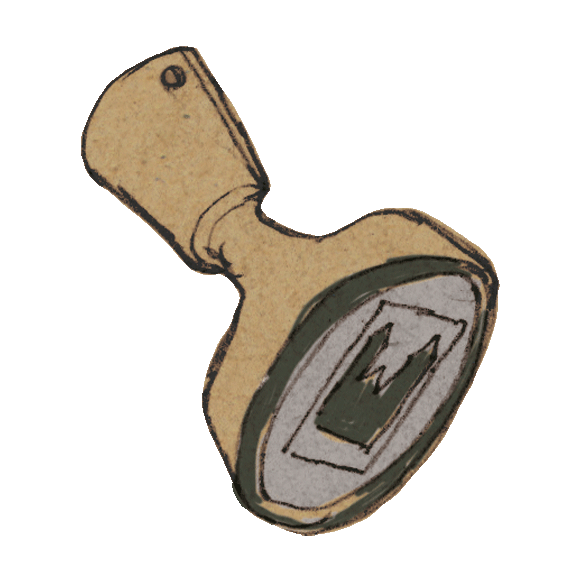
Today, the pilgrim’s passport, the Credencial del Peregrino, serves as proof that the holder is on the Camino and commit to acting and behaving like true pilgrims do. There’s also ample space for the stamps they can collect at each stage of the journey: in pilgrim offices and churches, but also in cafés, post offices, or the town hall. The designs on the stamps are endless in variety, many are truly beautiful, and serve as a reminder of each stop along the way.

Whether traveling on foot, horseback, or by bicycle, pilgrims must collect these stamps regularly during the last hundred kilometers. At the end, as in days gone by, the great reward awaits in Santiago. Upon presenting all the necessary stamps, pilgrims receive the Compostela, the certificate confirming their completion of the Camino. It is not, however, a certificate of indulgence.

20

20

From Vadstena to Santiago

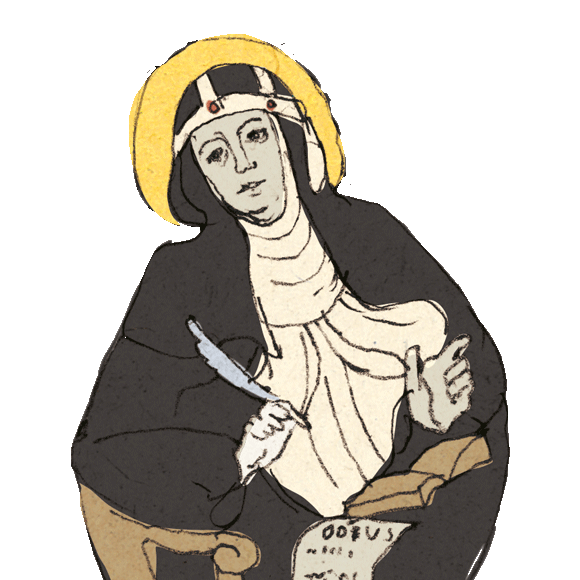
There were many famous pilgrims on the Way of St James. One who came from far north was Birgitta Birgersdotter, later canonised. Even as a child, she was very pious and had visions from an early age. Her parents belonged to one of the most powerful families in the country and married her off as they saw fit. When her children were grown, Birgitta made a pilgrimage with her husband to Nidaros to visit the tomb of Saint Olaf. Upon their return in 1341, they decided to undertake a pilgrimage to Santiago de Compostela. However, on the way back and already in Sweden, Birgitta’s husband died.
From then on, the widow led a saintly life. In a revelation, she was given the task of founding an order and a monastery and she did so. She went to Rome, where she founded a hospice for Swedish pilgrims and students, cared for women on the margins of society and ambitiously interfered time and again especially in church politics.
The route she took with her husband to Santiago has been partially reconstructed. They probably sailed from Kalmar in Sweden to Stralsund and then set out on the long walk to Galicia. Today, you can follow in the footsteps of the Swedish National Saint from Rügen. The Birgitta Way is part of the large network of St James’s Ways and leads via Stralsund, Güstrow and Schwerin to north-western Germany and through places that are known to have been touched by pilgrimage routes in the Middle Ages. It is marked with the familiar scallop shell bearing the white Birgitta cross.

19

19

The sweet voice of Galicia

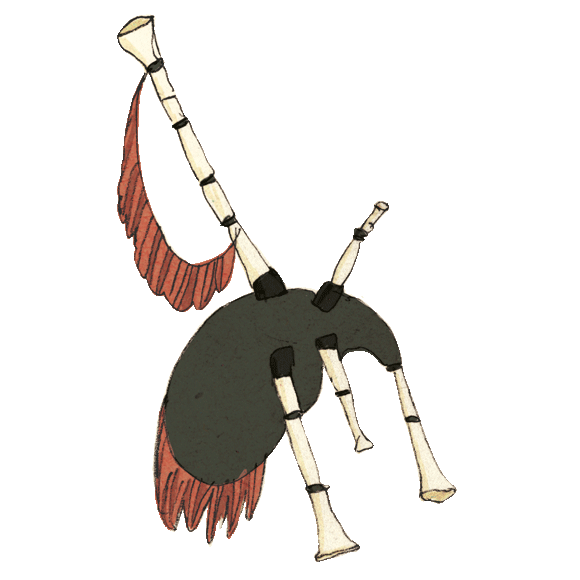
When pilgrims finally arrive in Santiago and at the cathedral, there is almost always a gaitero standing under a stone arch near the entrance, playing his instrument. Exhausted and aware that they have finally arrived, pilgrims may lose their composure, and sometimes, when the sound of the Gaita mixes with that of the bells high above, a moment of pure magic arises.

Bagpipes are not exclusively a Celtic instrument. They are played in the Balkans and North Africa, in India and beyond the Ural Mountains, and are familiar to the Polish Gorals as well as the Estonians and Finns. It was originally a shepherd’s instrument, with a bellows made of goat or sheep skin and various pipes. There are also variants without drone pipes, but most types have between one and six of these humming sustained notes, over which the player plays the melody.

Interestingly, bagpipes are documented in the courtly culture of the Middle Ages. The Codex Manesse shows them being played alongside German minstrels, the Cantigas de Santa Maria show them at the Castilian court of Alfonso the Wise. Even on the cathedrals of that period, bagpipe players can be found carved in stone. The Gaita, to return to Galicia, has one of the sweetest voices of all its siblings, but is traditionally played alone.

18

18

A Short History of the Mozarabs

This is a topic often overlooked in accounts of the Reconquista. When the Iberian Peninsula was conquered from North Africa, the foreign troops encountered a Christian land with dioceses, churches, and monasteries. After 711 and the beginning of the Islamization from Andalusia to the north, most Christians didn’t convert to the new religion within a short period of time. Even in the 11th century, there were entire villages with purely Christian populations, especially around old episcopal cities like Toledo, Cordoba, and Seville.

Those who remained true to their faith and paid the jizya, the poll tax, quite naturally adopted much of the new way of life and culture. On the other hand, the new rulers exerted pressure on the population to convert from the very beginning. This led to uprisings and, consequently, several waves of emigration to the small northern states that had remained Christian. In the Kingdom of León, for example, refugees from Cordoba and Toledo were settled and rebuilt the villages along the border that had been abandoned during the war. They were called Mozarabs, after the Arabic word mustaʿrab, which refers to someone who lived like an Arab.

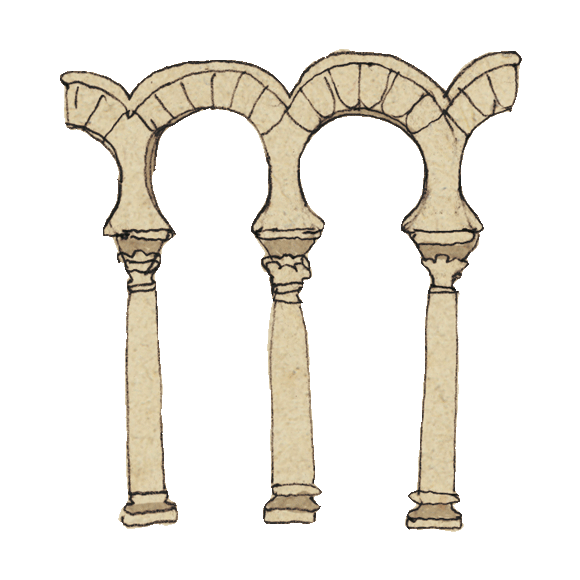
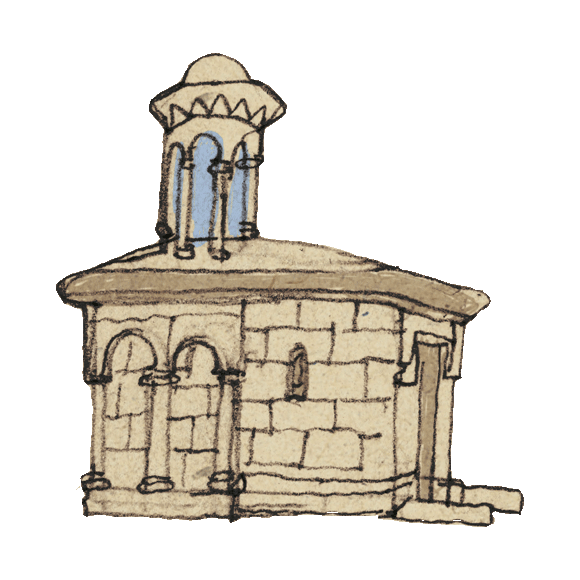
With craftsmen and master builders, the new style arrived in the north: arcades with horseshoe arches, double windows, and pillars consisting of two or four columns. They also brought decorative elements—stylized plants, openwork fillings, and frescoes—from the south. A particularly beautiful example of Mozarabic architecture is the Church of San Miguel de Escalada, not far from the Camino Francés in Gradefes, León. It belonged to a monastery built in the 9th century by monks from Cordoba, which in some ways resembles the Mezquita there. Incidentally, there is also a Mozarabic Way of St. James, which led pilgrims from Granada via Cordoba to Merida, and from there to the Via de la Plata and Santiago. But that is another story.

17

17

Finis Terrae – The Place Where the Sun Died

Here, the sun sets in spectacular images, as if being swallowed up by the sea. From here, heroes of ancient times set out on stone boats to reach the otherworld beyond the horizon. Here, the first Roman conquerors found an altar dedicated to the sun. And it was here that some pilgrims on the Way of St James came to burn their clothes according to ancient tradition before setting off on their journey home.

This is, of course, about Cap Finisterre, which juts out into the Atlantic Ocean like the sharp nail of an outstretched finger, about 60 kilometres west of Santiago de Compostela. There is a lighthouse here, a constant, very fine drizzle and a lot of fog. So much for the facts. But visitors feel surreal and overwhelmed when, on the way to the lighthouse, and under the drizzle, the foghorn suddenly sounds; long, drawn-out wails like those of lost souls or simply a warning to hikers and ships in dangerous territory.

Perhaps such sensory impressions are one reason why talk of the end of the world, which is said to lie beyond the cape, seems so credible. Moreover, this is Celtic country. The cloud-covered landscape provides a wonderful backdrop for their pre-Christian myths. One might wonder whether the stretch of coast between the cape and the town of Malpica, west of A Coruña, is also called Costa da Morte, the Coast of Death, because of the many shipwrecks and countless dead sailors. Or whether we are dealing here with an area that was a sacred place for the Celts or even much older cultures. After all, archaeologists have recorded the highest density of prehistoric burial mounds in the entire Iberian Peninsula here.

Be that as it may, Finisterre is always an overwhelming experience. And one might feel a little sorry for the apostle, who is said to have destroyed the pagan sun altar here in holy wrath. All in all, he wasn’t very successful.

16

16

The gold mines of Las Médulas

There are many reasons to leave the Camino Francés, which is very crowded in summer, and hike on an alternative route. Especially if you are looking for peace and quiet and want to enjoy a landscape that is varied and sometimes enchanting, sometimes breathtaking. The Camino Inverno is ideal for this. The winter route is so named because it bypasses the section across the mountain village of O Cebreiro, which is often snow-covered in the colder month, and, more importantly for us, leads the pilgrim to Las Médulas.

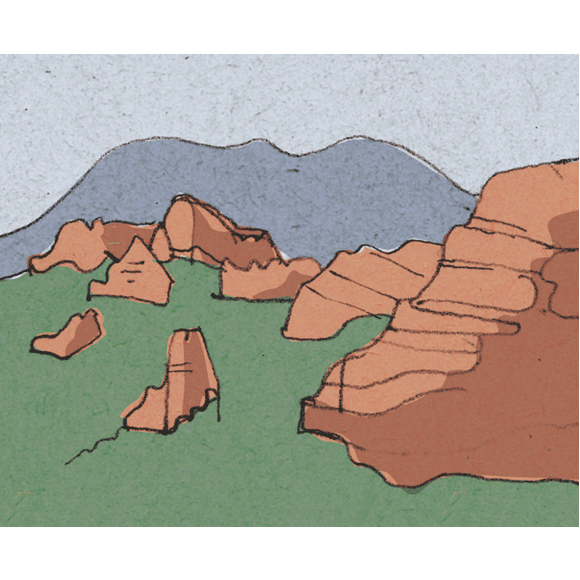
Many routes to Compostela run along old trade routes, but this one is special because the hills of Las Médulas were home to the oldest gold mine in the Roman Empire. The bizarre shapes of the landscape, glowing golden in the light, are the result of 250 years of mining the precious metal, which began with the conquest under Emperor Augustus in 25 BC. How this happened has been handed down by Pliny the Elder. The technique is called ‘Ruina montium’ and, as the name suggests, it not only destroys the rock, but also gradually erodes the mountain.

Horizontal cavities on multiple levels and vertical shafts had to be dug across the mountains, through which water was then flushed. This must have been derived from the Sierra de la Cabrera, so a canal system over 100 kilometres long was also needed.
Pliny describes very vividly how the miners did not see the sun for months while digging, and were constantly exposed to the danger of being buried in rockfalls. It is astonishing that the Romans did not use slaves for this, but tens of thousands of free workers. Given the annual yield of six tonnes of gold, which amounted to 1,635 tonnes over 250 years, it must have been more than worth it.
Remains of canals, tunnels and roads built for transport are still preserved. But nothing is more awe-inspiring than the reddish-golden rocks in an breathtaking landscape.

15

15

In dulci jubilo

Many pilgrim accounts describe the moment when pilgrims board a ship, set foot on solid ground again on their return journey, overcome a danger, or see their destination for the first time. At these moments, they often break into song, frequently the Te Deum Laudamus, “God, we praise you.”

Singing is an integral part of Christian ritual, whether it’s the responsorial chant between the leader and the congregation, the monks’ Liturgy of the Hours, or chants during processions. While a pilgrim might not sing a song while walking the Camino, communal singing is always part of the experience when visiting a church, celebrating Mass, or finding lodging for the night in a monastery hospice.

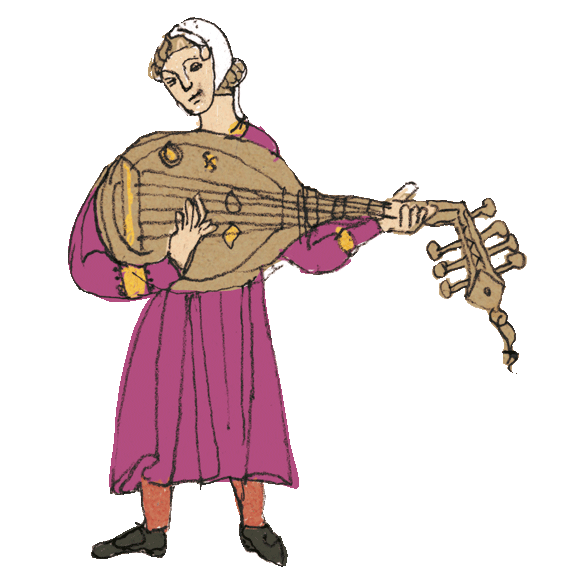
The land north and south of the Pyrenees, through which the Camino de Santiago passes, has a very special musical tradition. This is the home of the trobadors, as they are called in Occitan, and among them were not only traveling minstrels but also princes like the famous William IX. of Aquitaine. Another, whom one can justifiably call a trobador of the Virgin Mary, was Alphonso X of Castile. Perhaps he himself wrote and composed some of the Cantigas de Santa Maria, or they were all written, collected, and recorded in precious codices at his behest—in the end, there were over four hundred.

And of course, as no longer surprises the reader, our oft-repeated Codex Calixtinus also contains chants, beautiful Gregorian music dating from before the 12th century and already set to polyphony. Did the common pilgrim sing this on the way to Compostela? Certainly not; without training, that was impossible. Alongside these artful compositions, however, many songs in honor of St. James have survived, in every language and style of the peoples who journeyed to his sanctuary. Many have been handed down and are still sung today, even in the Faroe Islands, so far removed from Spain.

13

13

For even a pilgrim’s stomach can handle a good meal

Anyone setting out on a pilgrimage to Compostela today need not worry about their physical well-being. The hostel system is well developed, even the smaller towns along the way offer local cuisine, and every pilgrim guide has culinary recommendations to suit every budget and taste. Pilgrims in earlier centuries also had to take care of their well-being if they wanted to make it all the way to Compostela. The guidebook from Codex Calixtinus warned of evil innkeepers, bad cooks, and thieving maids, after first advising pilgrims not to take any money with them, only as much as would fit in their pilgrim’s bag. So where did they get their food?

First of all, there were monasteries along the Camino where pilgrims could find straw mattresses and food. Pretty soon, hostels and hospices sprang up, specifically geared towards the care of pilgrims. Even distinguished ones with horses and entourages could stay here and order something better than bread soup. Account books of high-ranking pilgrims to Jerusalem give an idea of the standard of living when the infrastructure was in place. Companions of the Saxon Duke Henry the Pious recorded with his secretary that their lord had feasted his way along the Camino de Santiago in 1506, although there is no doubt about his deep piety.

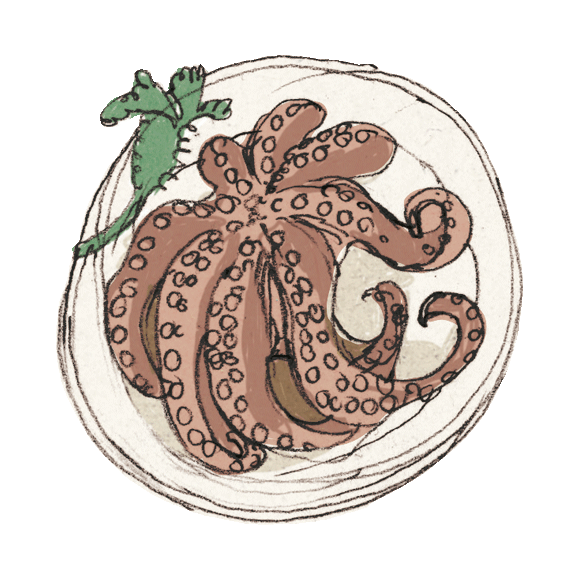
Unfortunately, we have no information on the extent to which German pilgrims indulged in the delicious seafood that is available today in Galicia’s popular Pulperías. Pulpo a feira, cooked octopus arms cut into pieces, drizzled with olive oil and sprinkled with sweet paprika powder, may not have been to everyone’s taste back then. At the end of the Camino, delicious round Santiago cakes, baked with only sugar, eggs, and ground almonds, provided consolation for the hardships of the journey. Sprinkled with powdered sugar, they are only authentic, when leaving a brown Santiago cross in the middle.

12

12

The Journey of Souls

Those who walk the English Way of St. James have less than 150 kilometers to cover, which many pilgrims consider far too short. However, it is a route of charm, history, and legends. In the Middle Ages, many pilgrims set out from the British Isles and Scandinavia to Santiago, but because they lived so far away and were accustomed to the sea, they traveled by ship and landed in A Coruña or Ferrol. The coast there is rugged and spectacularly beautiful, and at least nowadays, pilgrims to Santiago take the opportunity to walk a little further to San Andrés de Teixido. It is a tiny village high up on the cliffs of the Serra da Capelada, where not much more than broom grows and wild horses live.

The Celts used to visit sacred places here, and perhaps the following legend has its roots in this tradition. When Saint Andrew looked at his church in Teixido, he became sad and filled with jealousy. No one visited this place in the middle of nowhere; all the pilgrims flocked to Santiago de Compostela. He complained to God, who, wanting to comfort him, promised that every person would have to visit San Andrés de Teixido once in their lifetime, otherwise they would not enter the Kingdom of Heaven. That is why there is a saying in Spain that whoever does not make the pilgrimage to San Andrés while alive must do so as a dead person.

Thus the place became the second most important pilgrimage destination in Spain. Whether the Lord truly decreed that souls must make their way there as insects or small animals, no one can say. However, it is wise to tread these paths carefully so as not to harm anyone. And if you take the bus there and want to do a really good deed, buy an extra ticket. Because, so they say, this will spare a soul the long journey and an animal transformation.

11

11

The miracle of Santo Domingo de la Calzada

On the western edge of the province of Rioja, the Way of St. James passes a small town whose cathedral has gone down in the annals of the Camino Francés, who has no shortage of miracles of sacred architecture. But here the memory of a miracle is kept alive that tells us a lot about the pilgrimages of ordinary people and the dangers they could encounter on their way.

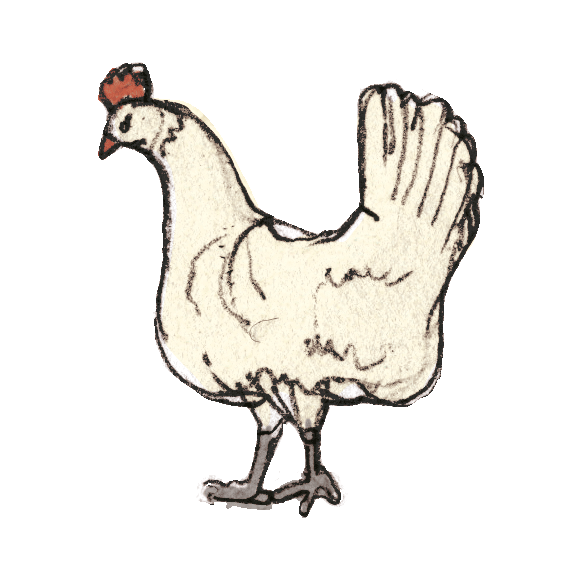
Legend has it that a German family once wanted to spend the night in Santo Domingo de la Calzada on their way to Santiago. The innkeeper, a wicked and devious man, smuggled one of his silver cups into their luggage during the night, cried murder the next day, and had all the travelers searched. When the cup was found in the possession of the Germans’ son, the town judge made short work of the case and the accused was hanged. The grieving parents continued their pilgrimage and came through the village again on their way back, passing the gallows. A voice called out to them and their son, who was not dead at all, told the happily shocked parents how St. James had supported him the whole time preventing him from dying. The parents ran to the judge, reported the miracle, and demanded that their son be taken down immediately. The judge was just sitting down to lunch and pointed amusedly to the two roasted chickens in front of him. Their son was as alive as these birds, he said, whereupon they suddenly came back to life and fluttered away.

The story quickly spread beyond the Way of St. James and was taken up and varied in folk poetry and art. In memory of the miracle, a chicken coop was installed in the local cathedral in the 15th century, in which a white rooster and a white hen were kept from then on. Whether they are really replaced every two weeks, as we hear today, one can only hope for the animals’ sake.

10

10

On the way to the Holy Sepulchre

On May 6, 1479, Hans Tucher and Sebald Rieter from Nuremberg set off on a journey to the Holy Land; two of many who undertook a pilgrimage to the most important Christian sites, following a well-trodden and proven route: over the Brenner Pass to Venice, from there by ship to Jaffa and onward by donkey to Jerusalem, then considered by devote Christians as the center of the world.

Pilgrimages to Jerusalem were a mass phenomenon in the late Middle Ages, and the journey was similar to the package tourism we know today. Unlike most, Hans Tucher took the time to write down the stages, experiences, and dangers of his journey. Once he arrived in Jerusalem, he spent nine days seeing what pilgrims were required to visit, from the Mount of Olives and Gethsemane to the spiritual highlight, a visit to the Church of the Holy Sepulchre. Here, Tucher, and perhaps Rieter, were knighted with others as Knights of the Holy Sepulchre.

In addition to his notes, the Nuremberg pilgrim measured the Church of the Holy Sepulchre, made sketches, and counted the steps between the individual stations on Jesus’ Way of the Cross. After their safe return home, Tucher and his companion wrote down their experiences. Tucher’s report was published in 1482 and served as travel guide for many later pilgrims, who particularly appreciated the lists of necessary equipment and recommendations.
The Nuremberg native was not the only one to return home with plans and measurements. Tücher was not the only one to return home with plans and measurements. Replicas of the Holy Sepulchre Chapel were springing up everywhere at that time. One very special example is the Holy Sepulchre in Görlitz on the Way of St. James, which recreates the topography of Jerusalem in a landscape garden, complete with chapels, Golgotha, and even the Kidron Valley. It is a pious work that enables those who stayed at home to follow Jesus’ final way.

09

9

The Valley of the Stone Men

The Camino Francés stretches for approximately 800 kilometers, from the Pyrenean passes to the Cathedral of St. James. And for the past few decades, it has once again become popular and well-traveled. Unlike in previous centuries, it is not only spiritual pilgrims who walk the entire route to Santiago de Compostela. Culture enthusiasts and nature lovers are also encountered along the way; the Camino has something to offer everyone. It’s not uncommon to choose to walk only a section of the route, depending on which region appeals to you and what the hiker feels confident about.

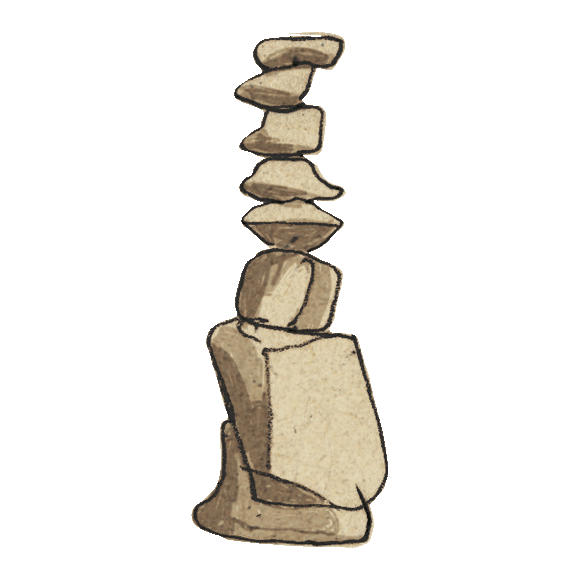
We’ve already heard about some of the interesting structures built in connection with the Camino de Santiago. One pleasant route runs for over 50 kilometers through the Rioja province and crosses a valley known for and named after its bizarre stone men. Stacked flat stones are a feature of virtually every ancient culture. In difficult terrain, mountains, or deserts, they served as waymarkers; large cairns were stacked beneath summit crosses, and these little towers often acquired a spiritual significance.

A considerable number of them can be found on the Camino between Navarrete and Nájera. The theory that the first cairns served as waymarkers, as elsewhere, has recently been dismissed. Perhaps pilgrims were familiar with cairns from their homelands and wanted to leave them as a sign that they had passed through. This would not be unusual; pilgrims in the Holy Land, for example, left their initials carved into walls or rocks at St. Catherine’s Monastery on Mount Sinai. Here in La Rioja, no stone needed to be carved; pilgrims simply collected them along the way, built their cairn, and those who came after added one next to it. And because so many people enjoyed doing this, they now adorn not only the valley near Navarrete, but also line the path.

08

8

La Catedral de Burgos

Castile in 1219. In the old Cathedral of Santa María de Burgos, King Ferdinand III marries a German princess. Until then, Castilian rulers had married women from the Iberian Peninsula. With Beatrix, a granddaughter of Frederick Barbarossa, new networks and avenues of influence opened up for the king and the realm. The young ruler took the wedding as an opportunity to demonstrate this by building a new cathedral. Perhaps it was also a suggestion from Bishop Mauricio, who had married the couple, as he had studied in Paris and seen the new cathedrals, which towered high into the sky in a completely new style.

Burgos was already a wealthy city at that time; Castilian rulers were crowned here, and it prospered thanks to its location on the Way of St. James and important trade routes. Two years after the wedding, the king and bishop laid the foundation stone, and almost forty years later, the cathedral was completed, apart from the towers and later alterations. Today it is considered the first Gothic church in Spain, overwhelming in its size and ornamentation, and characterized by the diverse architectural influences of the time.

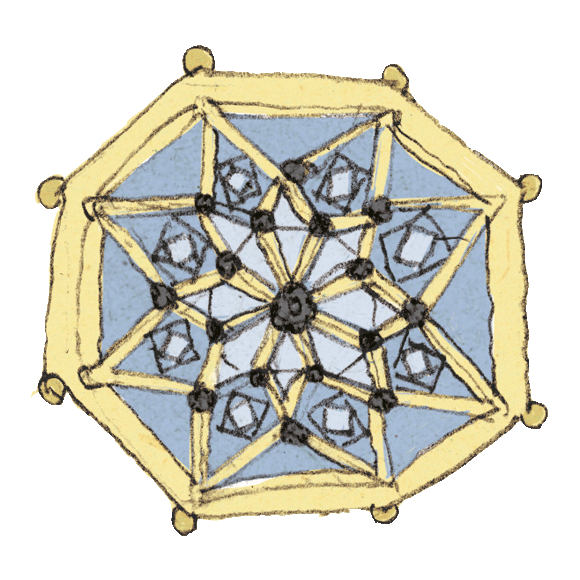
The first architect, whose name is not known for certain, is believed to have been a Frenchman who took his inspiration from the cathedrals of Paris and Bourges. The extent of what was possible back then, before the reign of the famous royal couple Isabella and Ferdinand, is evident in the Moorish stylistic elements crafted by Mozarabic or Muslim artisans. A rose window in the west facade also displays a Star of David. This was requested by the Jewish community of Burgos, who financed this window. Particularly impressive is the star vault of the crossing tower, which is depicted in the present-day doorway.

06

6

On the Road to St. James

Shoes or no shoes, enough coins or trust in heaven. What is the route like and where can I find shelter if I fall ill or the weather hinders me? These are questions pilgrims have been asking themselves since the first pilgrimages. It should not be forgotten that most people in the Middle Ages did not walk to Santiago, Rome, or Jerusalem, but visited particularly holy places in their immediate or wider surroundings. Among the first on the way to St. James’ tomb were Asturian kings, Spanish monks, abbots, and bishops. It was not until the High Middle Ages, after a period of unprecedented propaganda, that Santiago gained fame and popularity beyond the peninsula, certainly also thanks to the dissemination of the first pilgrim’s guide, the Liber Sancti Jacobi. This book offered suggestions for the route, equipment, and accommodation, but also warnings about evil people and disreputable inns.

As the stream of pilgrims grew, and they arrived from as far afield as Poland, England, and Iceland, those who returned wrote about their experiences and offered advice to their readers, that was now more up-to-date than that in the Liber Sancti Jacobi.
In 1488, a Servite monk from Thuringia region set out for Compostela, solely with the desire to find the best route and, along the way, to describe and recommend everything that was needed. He returned two years later and wrote his pilgrim’s guide, whose precision and wealth of information, even on tolls, passable bridges, and places to repair shoes, still amazes us today. Soon afterward, the flow of pilgrims dried up due to the Reformation, religious wars, and the excesses of the Spanish Inquisition, which saw every foreigner as a potential spy. It was not until the 19th century and the rediscovery of the apostle’s remains, which had once been hidden from English privateers, that interest revived.

Today, pilgrims have little to fear in terms of infrastructure and information. The charming signs with the scallop shell point the way, and when things get tricky, smartphones and observant people along the roads provide help that was not available in the past. Given the hundreds of thousands who are drawn to Santiago every year, we can be grateful for this.

05

5

The Battle of the Pass

It is not necessary to have read the Song of Roland to know its protagonist. Standing tall with his sword in his hand, he adorns many German market squares. As a fighter against the Moors, he went down in history, fallen at Roncesvalles, mourned and sung about, a figure of legend and glory. Yet he truly existed, and even if historians disagree on the exact location of the battle, the following can be agreed upon.

The Iberian Peninsula had been under Muslim rule since the 720s, and the emirs were by then as divided as their Christian predecessors. In the north, they felt threatened by the Emir of Cordoba, and so in 777, the governor of Barcelona sent messengers to Charlemagne. In exchange for military aid against Cordoba, he offered his own submission and that of several others. Charlemagne took his chance and marched out the following spring. His success was so resounding that the renegades soon regretted their offer. The governor of Zaragoza informed the Franks that nothing had been agreed with him and barred the gates. Unprepared for a siege, Charlemagne withdrew. Whether the Franks were subsequently ambushed by Basques or the king simply wanted to avoid potential rebels at his rear, upon reaching Pamplona, ​​he ordered it plundered and its walls razed. A disastrous decision.

What followed became one of the greatest tales of the Middle Ages. On the way across the mountains, Basque warriors ambushed the remaining rearguard and, in treacherous terrain, slaughtered until the last man. Legend says that before the end, Roland warned his king with his horn, but the army couldn’t return in time. So he smashed his sword against a rock to prevent it from falling into enemy hands. Centuries later, many pilgrims would cross the Roncesvalles pass, monks would build a hospice and a chapel, and, in foggy weather, ring the bell to bring pilgrims into safety. A sound like a reminiscence of Roland’s warning horn.

04

4

Megalomania on the Pilgrim’s Way

After the discovery of St. James’s tomb, the site quickly became a pilgrimage destination. The Iberian Peninsula finally had an apostle’s tomb, almost comparable to the tombs of Peter and Paul in Rome. And the Asturian kings, who owned Galicia, fought for their empire and faith under the saint’s banner, attracting streams of pilgrims from whom they profited handsomely. By the 10th century at the latest, people from all over Europe began to flock to Santiago, following routes that spread across the continent like a network. In France, these routes converged on four paths; three of them joined shortly before the Pyrenees and crossed the mountains at Roncesvalles. The fourth came from Occitania and led to the Somport Pass at an altitude of 1,600 meters; a pass that had already been used by the Celts and Romans.

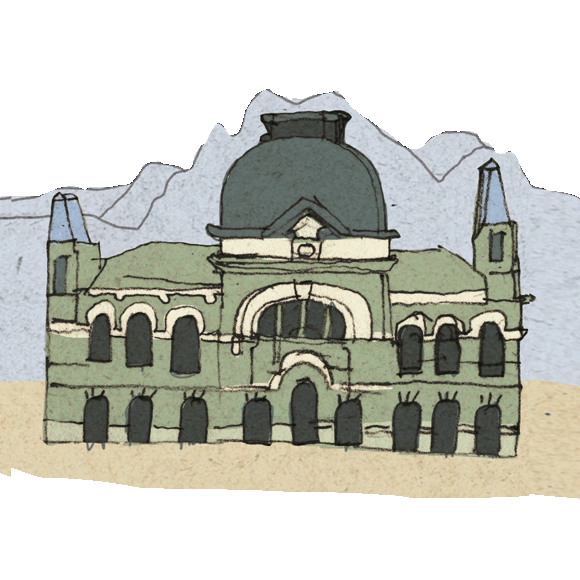
On the Spanish side, just below the pass near Canfranc, a pilgrims’ hospital had stood since the 11th century, allegedly founded by King Sancho Ramírez. Nine hundred years later, in July 1928, one of his successors, King Alfonso XIII, together with the French president, inaugurated the railway line from Pau to Zaragoza, which ran through an eight-kilometer-long tunnel. Due to the different track gauges, passengers had to change trains in Canfranc. Whether the hope was to attract an international clientele or to offer passengers a pleasant atmosphere during passport control and transfer, the new station was a building of gigantic proportions, a wild mix of Neoclassical and Art Nouveau styles, with an integrated hotel, restaurants, and offices for the railway, police, and customs. No expense had been spared, but one thing hadn’t been considered: that it wouldn’t work. Passengers found the transfers and waiting times inconvenient. During the Spanish Civil War and in the aftermath of World War II, train service was suspended, and when a railway accident on the French side caused a bridge to collapse in 1970, the connection was never revived.

At least in 2023, the station building reopened as a luxury hotel, complete with all the bells and whistles. And if all goes well, the train will once again run through the tunnel from 2032 onwards.