9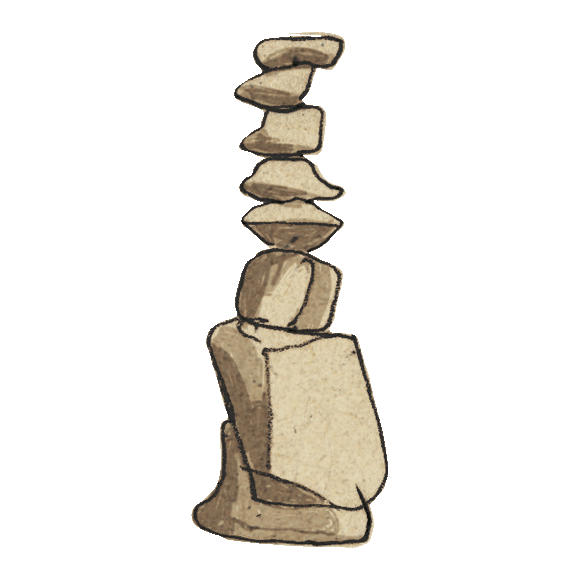
The Valley of the Stone Men
The Camino Francés stretches for approximately 800 kilometers, from the Pyrenean passes to the Cathedral of St. James. And for the past few decades, it has once again become popular and well-traveled. Unlike in previous centuries, it is not only spiritual pilgrims who walk the entire route to Santiago de Compostela. Culture enthusiasts and nature lovers are also encountered along the way; the Camino has something to offer everyone. It’s not uncommon to choose to walk only a section of the route, depending on which region appeals to you and what the hiker feels confident about.
We’ve already heard about some of the interesting structures built in connection with the Camino de Santiago. One pleasant route runs for over 50 kilometers through the Rioja province and crosses a valley known for and named after its bizarre stone men. Stacked flat stones are a feature of virtually every ancient culture. In difficult terrain, mountains, or deserts, they served as waymarkers; large cairns were stacked beneath summit crosses, and these little towers often acquired a spiritual significance.
A considerable number of them can be found on the Camino between Navarrete and Nájera. The theory that the first cairns served as waymarkers, as elsewhere, has recently been dismissed. Perhaps pilgrims were familiar with cairns from their homelands and wanted to leave them as a sign that they had passed through. This would not be unusual; pilgrims in the Holy Land, for example, left their initials carved into walls or rocks at St. Catherine’s Monastery on Mount Sinai. Here in La Rioja, no stone needed to be carved; pilgrims simply collected them along the way, built their cairn, and those who came after added one next to it. And because so many people enjoyed doing this, they now adorn not only the valley near Navarrete, but also line the path.