7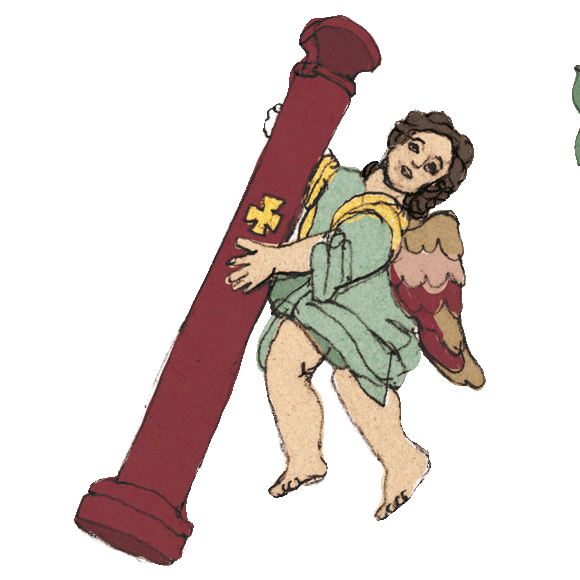
Nuestra Señora del Pilar
People are often surprised by the meaning of local first names, especially older ones, while foreign names are initially classified as beautiful or not so beautiful based on how they sound. Yet on closer inspection, many of them are just as strange, and without knowing their history, it is difficult to understand why they are so common. Take the Spanish name Pilar, which Germans find much less strange than Giesebrecht or Bergunde. Pilar is the Spanish word for a column or pillar, and one might well wonder what makes people name their children this.
The fact that this leads us to the apostle James is one of many miracles surrounding the saint. The story is recorded once again in the Codex Calixtinus and goes like this:
When James travelled west to preach the Gospel, he had so little success in the Hispanic provinces that he grew weary and was overcome with despair. One evening, near the city of Colonia Caesaraugusta, today’s Zaragoza, he came to the banks of the Ebro River. He sat down and began to pray when suddenly a bright light appeared in which he could see Mary, the mother of Jesus, surrounded by many angels. She comforted him, asked him not to give up, and predicted that he would win many people to the faith.
As a sign, she let a pillar slide to the ground. It was made entirely of jasper, and on top of it stood the figure of a virgin holding a child.
The legend does not say whether James was confused that Mary appeared to him here at the other end of the world, even though he knew she was still alive and in Jerusalem. What it does say is that the apostle and some of his companions built a chapel around this pillar and, after its consecration, returned to Judea, where he was martyred under Herod.
Today, the chapel has been replaced by the Basilica of Our Lady of the Pillar. The Virgen del Pilar is considered the patron saint of Spain, and October 12 is her feast day. As a result, many children born on this day are given her name, often as a middle one, and incidentally, this applies equally to girls and boys. The pillar can be seen until today in the basilica, and images and reliefs depicting scenes from the legend can be found in many Spanish churches. This is also and especially true along the Way of St. James.