24

24

The Stralau Church

As one of Berlin’s oldest village churches, it is also the last remaining evidence of the former fishing settlement. At the beginning, only eleven families lived here, and it is quite astonishing how the church was completed in just five years. In the centuries that followed, the church suffered damage on several occasions, not least from the almost inevitable fires that struck the wooden church tower several times, until it was decided at the beginning of the 19th century to put an end to the misery and rebuild the tower in solid stone.
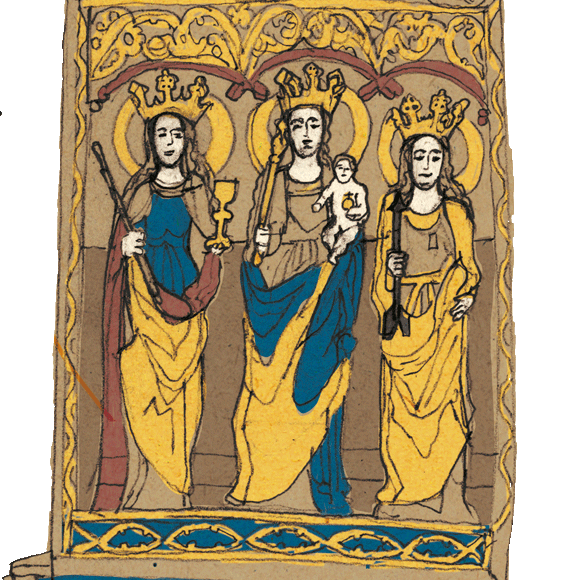
However, the substance of the church was never destroyed until shortly before the end of the war in 1945, when an air raid caused the ribbed vault and a wall to collapse. It was very fortunate that two precious stained glass windows, showing the remains of late Gothic paintings, were preserved. As a result, the church was without an altar for years after its reconstruction. The altarpiece that can be admired today did not arrive on the Spree until the 1960s. The shrine with the figures of Saints Ursula and Catherine framing Mary with the baby Jesus comes from a village church near Finsterwalde, while the wings belonged to an altar in Brandenburg Cathedral. Roughly the same age as Stralau church and the stained glass windows, the altar fits wonderfully into the interior.

23

23

Take a Walk on the Wild Side

Two distinguished older gentlemen locked in a deep kiss may not be anything particularly exciting in today’s Berlin. Except for the fact that this image has become iconic and one of the most famous images in Berlin’s most famous open-air gallery. The artworks of the East Side Gallery are painted on what is now the longest contiguous section of the Berlin Wall, stretching along the banks of the Spree between Ostbahnhof and Oberbaum Bridge.
The initial impetus for painting the wall, which fell in November 1989, was a call for help from the Association of Visual Artists of the GDR, whose members had suddenly lost their commissions. And so the East Side Gallery became the first project in which more than a hundred international artists participated, in the territory of the once largely isolated state. They painted their commentaries on the rapid changes after the break-up of the former Eastern Bloc and reminders of what life was like in divided Germany.
Weather conditions were not the only factor influencing the artwork, even though they were the most significant. Some pieces disappeared, others were added, and so at some point a comprehensive restoration became necessary; although not all of the artists were enthusiastic about it. Today, the East Side Gallery belongs to the Berlin Wall Foundation, a lasting testimony to how what once divided could become an expression of a shared narrative between East and West.

22

22

Meeting point flower bed

Berlin has many rose gardens, including one in Friedrichshain, between Friedensstraße and Frankfurter Tor. Originally, a cinema was to be built here, but when the plan was abandoned in the spring of 1953 for somewhat unclear reasons, flowerbeds were laid out in a small park instead. At around the same time, the increase in work quotas hit Eastern Germany like a bolt from the blue, as there were no plans to adjust wages for employees.

The fact that quiet protests and petitions to the prime minister had no effect became clear on 15 June, when wages were paid. The Berlin construction workers, already affected by work stoppages and wage cuts due to material shortages and poor organisation, went on strike the following day at the Friedrichshain hospital construction site. When word spread that the strikers were being detained there, colleagues gathered in solidarity behind the newly laid out park and marched in protest to the House of Ministries on Leipziger Strasse. This was the prelude to what would later go down in history as the popular uprising of 17 June. A commemorative plaque on a small wall in the rose garden on Karl-Marx-Allee serves as a reminder.

21

21

When Punch Performed at the Basement

Every afternoon at 3:30 p.m., the curtain rose at the puppet theatre on Stalinallee 19. It was closed on Sundays because this was not a theatre house, but one of two high-rise buildings to the right and left of Strausberger Platz, which housed not only highly sought-after apartments but also a children’s department store, to which the small stage in the basement belonged, as did the Children’s Café on the thirteenth floor, where parents were only allowed with their children’s explicit permission.

The ‘Haus des Kindes’ (House of Children), as it was officially called, was one of the prestigious projects with which the young GDR wanted to score points architecturally and politically. Hermann Henselmann, star architect of Stalinallee, had also designed this building. The idea of a department store exclusively for the needs of the youngest came from Moscow, but Henkelmann’s colleague Rolf Göpfert had visited the branch in Prague and was impressed.

Both café and puppet theatre were adopted, as was the range of goods on offer, from ready-to-wear clothing and sports equipment to toys. The building’s interior was as exquisite as it was pompous, from the marble columns at the entrance to the wrought-iron banisters, whose beautiful animal figures disappeared decades later. On the sixth floor, Henselmann had designed a private apartment for himself and his family, and perhaps his many children were also given some coins from time to time for a performance at Punch’s in the basement.

19

19

50,000 Talers

“You can smell Berlin from a radius of nine kilometers.” This dictum by Carl Linnaeus dates back to 1770, and even a hundred years later, the situation had not improved significantly. The lack of not only fresh but also clean drinking water, combined with the absence of a sewage system, caused several major cholera epidemics up until the mid-19th century, esepcially in the city’s poorest districts.

Since there was no municipal hospital, the city council repeatedly had to negotiate with private hospitals for the admission of indigent patients. Given the rapidly increasing population, the construction of a hospital could no longer be postponed. At the initiative of the famous physician Rudolf Virchow and the city politician Heinrich Kochhann, a plot of land in Volkspark Friedrichshain was chosen, and the architects Martin Gropius and Heino Schmieden were commissioned.

Without the 50,000 talers donated by Jean Jacques Fasquel, who came from a Huguenot family, the project would likely have dragged on for some time; but his condition that the foundation stone be laid within five years gave everything an additional boost. In October 1874, Berlin’s first municipal hospital was opened. The dedication plaque for the donor is still preserved today.

18

18

Intoxicating Bread

In Mesopotamia, perhaps ten thousand years ago, a batch of bread dough was left out in the heat for too long and began to ferment. The baker tasted it to see if he could still save it and developed a taste for it. Sometimes it’s that simple.
Soon, nothing was left to chance, and people in other parts of the world were also stirring the fragrant mash. The Chinese drank rice beer, the Ethiopians fermented millet and the Incas fermented corn. What they all had in common was that they were nutritious, intoxicating and, besides its delicious taste, were a more than useful substitute for impure, disease-causing water.

In medieval Europe, brewing was initially woman’s work, and beer was served with every meal. Monasteries in particular experimented a lot, because during Lent, when many foods were forbidden, beer promised flavour and, above all, calories. The famous abbess Hildegard von Bingen recommended it for curing a wide variety of illnesses: ‘Drink beer!’ Today, people no longer look to it for healing or nourishment; they love it, whether traditional or gourmet. And even though old breweries like Patzenhofer and Böhmisches Brauhaus on Landsberger Allee have changed their purpose over time, beer is still brewed and, above all, served in Friedrichshain.

17

17

Berlin and Modern Dance

Social upheavals were already brewing years before the political eruptions of the 20th century. A storm swept through almost all artistic forms, including in Berlin, which had been a highly modern city even during the Imperial era—a fact often forgotten today.

New, much freer forms also established themselves in dance theater at that time; expressionist dance was even called „German Dance“ in the Anglo-American world. One of the first leading figures was Isadora Duncan, who came to Berlin from the USA via London and Paris and founded a dance school of a completely different kind there in 1904. Mary Wigman, Gret Palucca, and others followed; one of the most extreme, the nude dancer Anita Berber, later became the face of the city during the Weimar Republic.

After the interruptions caused by the war and the reconstruction years, developments in modern dance took place more in Brussels, Frankfurt, and Wuppertal. The new situation after the fall of the Berlin Wall, which acted as a catalyst, drawing exciting artists to Berlin, also gave rise to interesting venues like Tacheles and Sophiensäle. Dancer and choreographer Sasha Waltz was already involved there; she later co-founded Radialsystem on Holzmarktstraße in Friedrichshain. The former wastewater pumping station from the Wilhelminian era is now a multi-disciplinary cultural center, a home for many things. And certainly for the Sasha Waltz Company.

16-today

16

Café Sibylle

It is not recorded who came up with the idea of naming the café, which opened in 1953 at Stalinallee 72, “Milk Drinking Hal”. A strangely bland name for an establishment on the new grand boulevard, but at least a few years later, someone saw sense. The popular meeting place was now called „Sibylle“, after the innovative women’s magazine which was so exciting and sought-after by the public that it quickly earned the unofficial title of “East German Vogue”. Whether editors, photographers and models met at the milk bar before the renaming is no longer important today, but the magazine and café were linked by flair and history.

The fall of the Berlin Wall affected both institutions equally: Café „Sibylle“ closed and the magazine also had to give up after a few very successful years. Some of its best-known photographers, such as Sibylle Bergemann and Ute and Werner Mahler, co-founded the Ostkreuz photo agency in 1990. And the café under the striking yellow lettering is once again an established address in Friedrichshain. Besides an exhibition on Stalinallee, it offers readings and other cultural events, and the once-popular Swedish Ice Cream Sundae is available again.

15

15

Ostkreuz, please change trains!

The story of Berlin’s rise to become a modern metropolis is closely linked to industrialization and the development of the railway. The new mode of transport made its debut in Wales in 1804, but it took quite a while before it prevailed against resistance from various quarters.
In 1838, the Prussian government in Berlin was urged to consider the construction of a railway and rail network. Once the first lines had left the city in all directions, the efficiency of rail became apparent, and the city railway (Stadtbahn) began connecting the individual stations and districts.

With the opening of the Ringbahn (circle line) in the 1870s, a railway junction was created in the east. There was no direct stop yet, but that changed with the construction of Stralau-Rummelsburg station on the border between today’s districts of Friedrichshain and Lichtenberg. Under the name Ostkreuz, it became the capital’s most important interchange station, even though little of the old structure remains today after various renovations.
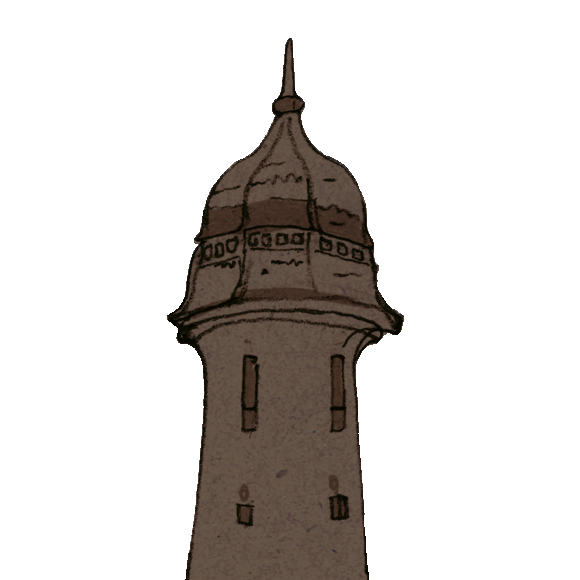
The striking water tower with its slate-covered dome is part of it. It was completed shortly before the outbreak of World War I and equipped with a capacity of 400 cubic meters to supply the steam locomotives. The dark purple tiles cladding it served as protection against soot, but also give it a charm all of its own.

14

14

The bell in the park

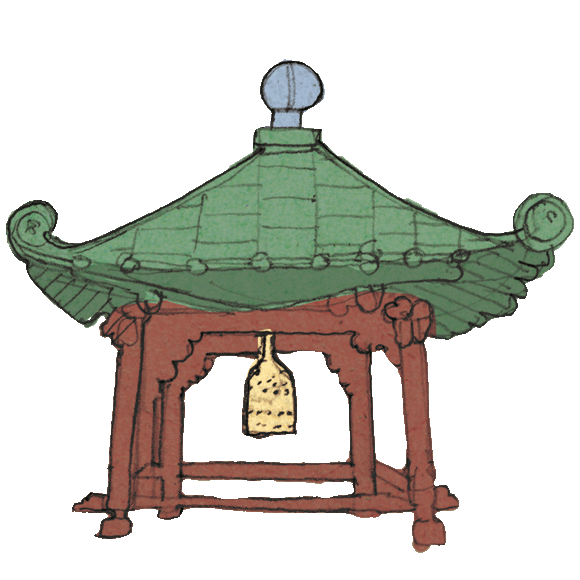
Walking through Volkspark Friedrichshain to the Great Pond, you suddenly find yourself standing in front of a small Japanese temple: a curved pagoda roof supported by red wooden pillars, with a simple bell underneath. You would never guess that it weighs almost four hundred kilograms. If you step closer, you can read the word “Peace” on a banner, in German and Japanese.

Peace bells can now be found all over the world. The first was conceived by Chiyoji Nakagawa, a Japanese man who, in 1942, was the sole survivor of a battle in Burma, alone and unconscious in a bell tower. After the war, he represented his country at the United Nations General Assembly in Paris in 1951. He promised to build a peace bell and asked people from all over the world to donate coins for it. Shipments arrived from 65 countries, and even the Vatican sent gold coins bearing an image of the Virgin Mary and her son. The bell, cast from thousands of coins, was installed at the UN headquarters in New York, and Nakagawa soon founded the World Peace Bell Association, which also gave a bell to Berlin in 1989. Every year on August 6, the day the atomic bomb was dropped on Hiroshima, it is struck with a long wooden clapper.

13

13

The gallery at Helsingforser Platz

When the prefabricated building was constructed in 1985, the gallery was already part of the plans: not the brainchild of the East Berlin city authorities, but of two freelance photographers, art historian Ralf Herzig and curator Ulrich Domröse. Their intention was to create an exhibition space exclusively for photographic art, as there was no such gallery or museum anywhere in the country at that time. When, after lengthy negotiations for approval and conception, the doors finally opened, Ralf Herzig, who had set everything up and supervised it down to the smallest detail, was no longer involved, and Ulrich Domröse also left the gallery soon after. Neither of them was willing to bow to ideological demands such as party membership or interference by state authorities in exhibition concepts.

Regardless, the gallery immediately attracted overwhelming interest. Beyond the opportunity to present artwork, it became an enthusiastically received place of interaction between the public and photographers. The catalog of local and international names who exhibited here would be legendary, and fortunately, the location, intention, and interest have survived all the upheavals since then.

12

12

The Great Socialist Boulevard

It was to be magnificent, overwhelming, and more than a replacement for the stately townhouses that lined the Große Frankfurter Straße, which had been destroyed in the war. While the government sent a delegation to Moscow in 1950 to study the new socialist urban planning, a gigantic recycling operation began in Berlin—a fact often overlooked. It is hard to comprehend the enormous quantities of bricks, steel, and rubble that were moved. Around 45,000 volunteers contributed more than 4 million hours, and in the end, 38 million bricks and 1,000 tons of steel were recovered from the ruins for reconstruction.

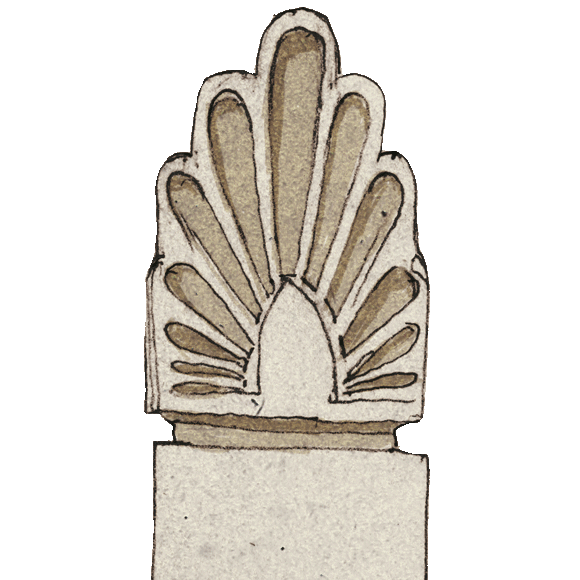
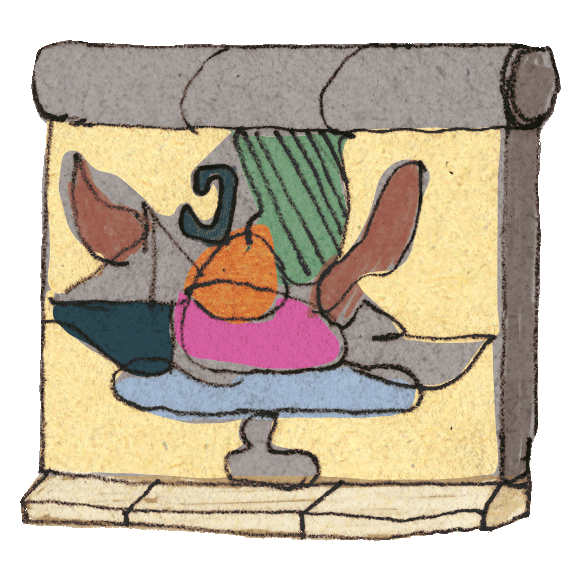
Recommendations and plans by architects Hans Scharoun and Hermann Henselmann to continue the Bauhaus tradition were rejected by the Soviet side and had to be reconsidered. In the end, it was decided to combine Moscow-style socialist classicism with that of the Schinkel school. Henselmann’s tower buildings at the Frankfurter Tor referred to Berlin’s famous German and French Cathedral, and the use of Greek columns, gables, friezes, and ornamental motifs such as the palmette shown here also tied in with Prussian classicism.

Even though the materials often failed to live up to their promises over time, and the so called „Confectionary Style“ was met with derision from all sides, in retrospect and in comparison with prefabricated buildings in following years, the architects had a lucky hand.

11

11

Lost Worlds

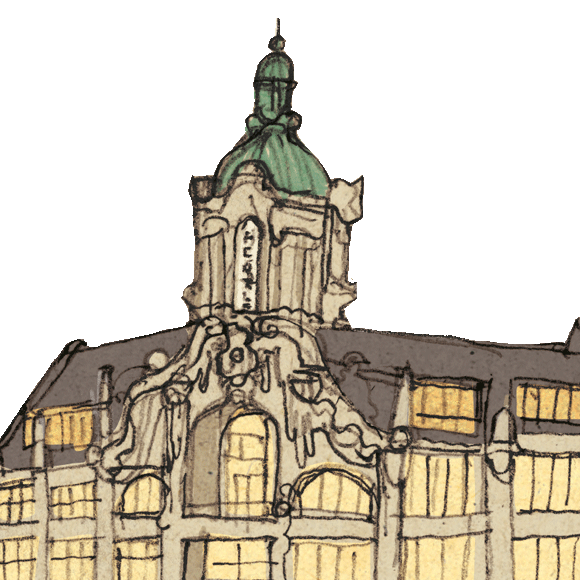
Shopping palaces and cathedrals of commerce – that’s how people referred to the large department stores that sprang up in the second half of the 19th century, with a mixture of irony and admiration. Industrialisation and rapid urban growth created a need for a completely different kind of supply, and those who were quick off the mark and had a brilliant idea were soon able to expand successfully.

One of them was Oscar Tietz. He came from a large family of Jewish merchants from the province of Posen and, with financial help from his uncle, was able to set up his first shop in Gera in 1882. His sales concept was new, and it may have helped that his uncle had gained two decades of economic experience in North America. Out of gratitude, his nephew named his company after him, ‘Hermann Tietz OHG’.

Oscar Tietz expanded with tremendous success, first to Munich, where he ran his first and sensationally furnished department store, then to Hamburg and finally Berlin. Here, at the turn of the century, the ‘Hermann Tietz’ department store opened on Leipziger Strasse. Competition was fierce, and stores outdid each other with magnificent architecture, both inside and out, a wide range of products and every innovative new feature available. After the grand opening at Alexanderplatz in 1905, Friedrichshain got its ‘Hermann Tietz’ three years later, at Frankfurter Allee 5-7. Oscar died in 1927 and did not have to witness the renaming and Aryanisation of the company after 1933. Like so many other buildings, the department store on Frankfurter Allee, now called Hertie, did not survive the war.

10

10

The Samaritan of Friedrichshain

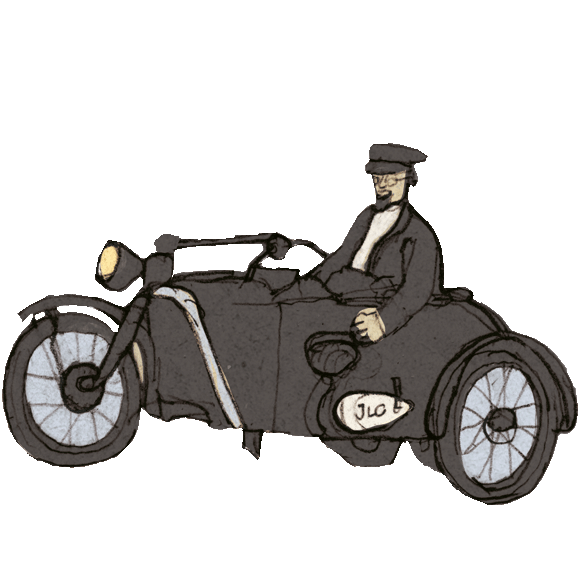
Wilhelm Harnisch, a Protestant pastor from Anhalt, came to Berlin and the Samaritan Church in 1931, when he was in his mid-forties. Due to the Great Depression, almost 40% of Friedrichshain’s residents were unemployed. In the face of this hardship, Harnisch took over a shop for the unemployed on what is now Bänschstrasse in the very year he began his ministry. Initially, he established a soup kitchen, but over time he transformed the shop into a meeting place for the needy, much to the displeasure of his fellow pastors. The situation worsened after the Nazis seized power. Immediately thereafter Harnisch ran the press office of the Pastors’ Emergency League from his shop and became a co-founder of the Confessing Church. Denounced and arrested several times, he was even dismissed. But the protests of his congregation were so vehement that he was reinstated.

Those who knew him described him as a profoundly kind person, with a sympathetic ear for everyone and the ability to solve problems simply and with great improvisation. A photograph of him, smiling cheerfully in his Cyclonette, a comfortable motorized tricycle manufactured by the Cyclon Maschinenfabrik on Boxhagener Straße, became famous.

Harnisch survived the war and coped with the difficult postwar years with the same can-do attitude as before. It’s no wonder that this man, who cared not about ideology but about people, soon became too much for the powerful figures of the GDR. They dismissed him in 1953, and he left the country that no longer wanted him.

09

9

The Once Longest Pedestrian Bridge in Europe

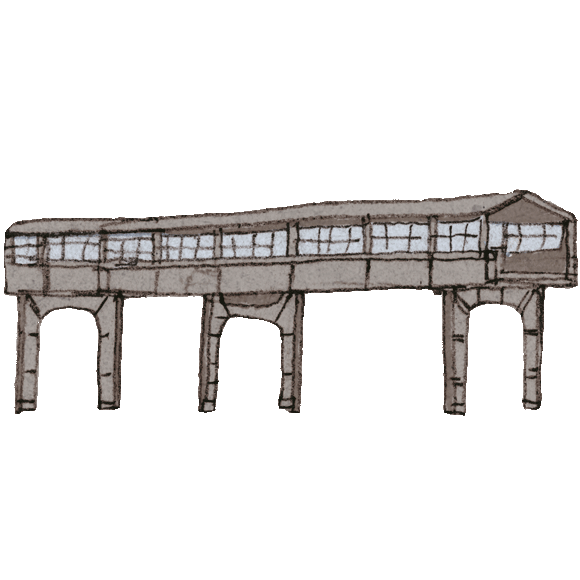
With the population explosion in the mid-19th century, a central slaughterhouse was needed to supply the whole of Berlin, also to put an end to the unspeakable hygienic conditions in the many small backyard slaughterhouses. So, in the autumn of 1876, the city purchased land in the Lichtenberg district and and, just five years later, was able to open the Central Livestock and Slaughterhouse, with a loading station for the animals nearby. The Ringbahn (Berlin’s circular railway) also had a stop there, aptly named after the central livestock market. Workers who got off here could cross the tracks of the loading station via a 100-meter-long wooden bridge.

The further the suburbs spread beyond the old city limits, the more urgently a new crossing became needed so that residents of the new housing developments wouldn’t have to walk across the slaughterhouse grounds. Starting in 1937, a steel structure was built on 22 pillars, which at one point were even embedded in the roof of one of the stables. A stair tower in typical brickwork completed the ensemble, soon nicknamed “Langer Jammer” (Long Lament) by Berliners. Destroyed during the war, the bridge was rebuilt and extended to 505 meters towards Lichtenberg, making it for a time the longest pedestrian bridge in Europe. With the closure of the slaughterhouse in 1991 and significant demolitions twelve years later, only a little over a hundred meters of the original structure remain at today’s Storkower Straße S-Bahn station. A reminder of a piece of former industrial history.

08

8

Close to the Water

“A city is only truly beautiful when there is water nearby,“ someone once said. Berlin has never been short of this; quite the opposite. With its rivers, canals, and lakes, totaling almost 59 square kilometers of surface area, it is clearly a city of water. It’s not just the major rivers like Havel and Spree that flow through the city and sometimes across a lake; countless canals accompany the smaller ones like Dahme and Panke. The number of bridges is quite surprising—almost a thousand are currently counted, more than in Amsterdam—including the most famous, the Oberbaum Bridge from Friedrichshain to Kreuzberg.

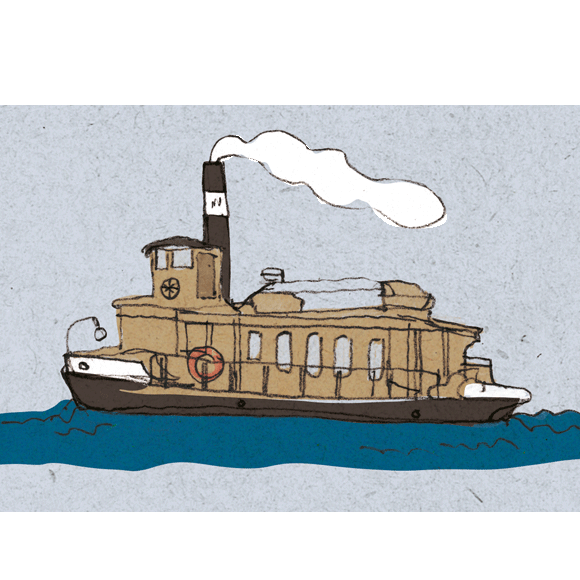
Along the banks of the Spree, numerous bathing establishments sprang up in the 19th century. The water here, near the city limits, was still of very good quality, and Berliners had plenty of space for swimming and splashing around. After the first municipal rowing club was founded in 1880, its boathouse stood near the Oberbaum Bridge at the Stralau Gate for almost twenty years. Here, on an early June morning in 1962, a spectacular escape attempt took place when young East Berliners, including a baby, turned the excursion steamer “Friedrich Wolf” around and fled to the western bank, under a hail of bullets from GDR border guards. Today, you can once again go anywhere by steamer, without any borders. How wonderful that Berlin is surrounded by water.

07

7

Subcultural melancholy

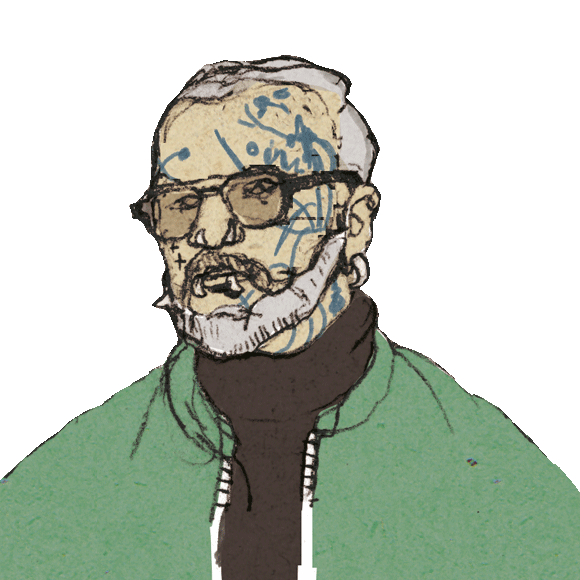
There was a time when he stood for Berghain, and Berghain stood for Berlin’s globally hyped club scene. But as always, it wasn’t that simple.

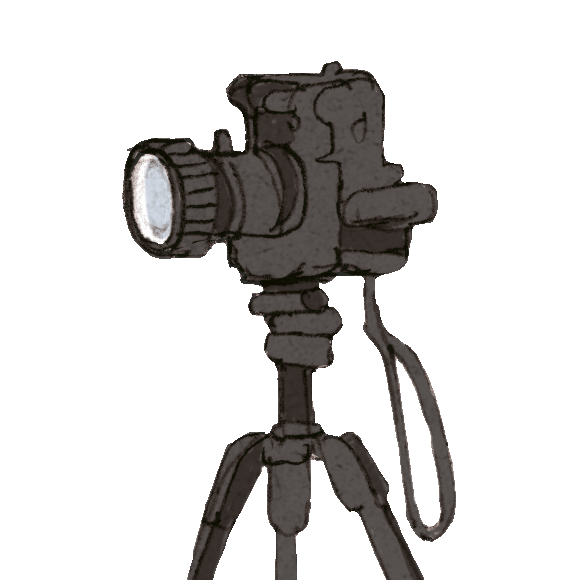
Sven Marquardt, a true native of East Berlin, was part of the punk scene in the 1980s, trained as a photographer at DEFA and came to fashion photography and the magazine Sibylle through his collaboration with Robert Paris, son of renowned photographer Helga Paris. Here, two different milieus already intersected, as he (among others) staged this exclusive GDR couture in wild locations, abandoned buildings, lost places and what is now called industrial culture. When the Berlin Wall fell, he stopped taking photographs and worked as a bouncer for techno clubs that sprang up all over East Berlin. One of these was the Ostgut, which, after various locations in the early 2000s, reinvented itself as Berghain in the Friedrichshain power plant.

Even before that, Marquardt had started working with his camera again, showing his melancholic, sensual photographs in exhibitions around the globe and teaching a photography class at the Ostkreuzschule in Weißensee. However, Berghain visitors can still hear his strict ‘Not today, sorry’ at the club door in Friedrichshain.

06

6

A Fish in the Coat of Arms

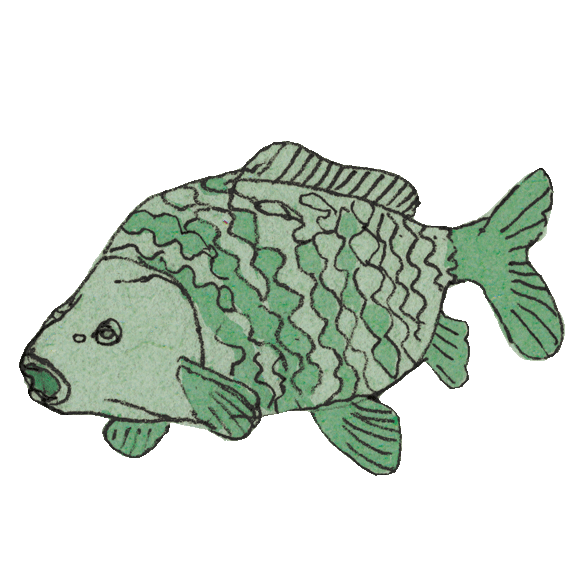
While Berlin and Kölln were foundations planned by merchants, Slavic fishermen had already settled on a peninsula in Lake Rummelsburg centuries earlier. They called their village Strala (arrow), because this small piece of land juts out into the water, providing them with food and sustenance. Eleven families lived there, built a church, and celebrated a fair every year on August 24th, the feast day of St. Bartholomew, patron saint of all fishermen and this church.

In 1554, Elector Johann Georg established the start of the fishing season on St. Bartholomew’s Day. Since then the fair developed into a popular event for the entire area: the Stralau Fishing Festival. This was also due to the fact that Berliners discovered the beautiful peninsula as a place for a day trip. Some had summer houses built there, and in the 19th century, curious Hohenzollerns, including the king himself, visited the village and the festival. Every fisherman set up a stall, and things often got quite lively. Drinking binges, brawls, and gatherings around the fishing grounds led to its demise in 1873, although there were repeated attempts to revive it. Today, Alt-Stralau is a tranquil island amidst the hustle and bustle of Berlin, where echoes of the past sometimes drift up from the water.